Things I DON’T Have in Common with the Tech Bros

Well, let me start first with the things I DO like that they (Silicon Valley tech bros like Elon Musk and Peter Thiel) also are known to like.

I like the first 80% of Atlas Shrugged.

I do still love Douglas Adams. Mostly.

But I think I don’t like Iain M. Banks. I read somewhere that Elon and his buddies have referenced in multiple instances their love of Banks’ Culture series of space opera novels. So in my casual side quest to read what they read, to understand their motivations for controlling this current hellish movement in American history, I downloaded a copy of Consider Phlebas, the first book of the Culture series.

And it’s bad.

I’m only 43% in, and I recall seeing some user reviews that suggest the first book isn’t well regarded and the series gets much, much better. But my lack of faith in that opinion is like arguing with someone against Jordan Peterson, when they say “But you really have to watch this 3 hour video he did on personal responsibility and the importance of tidiness” or “You really have to watch these 7 videos of him DESTROYING these left wing cucks in carefully curated straw man debates”. Uh, no I don’t.

There’s enough for me to dislike already.

First, there is very little that’s compelling about the main character, Horza, a “Changer” operative that can impersonate anyone and has advanced self-bio-hacking abilities. Yawn.

Then, eventually, he is dropped into a “the natives are restless” hostile island situation, where the villain is this disgustingly obese (see, I avoided using the word morbidly which is so overdone) corpulent cesspool of a tyrant. And it’s just so gross and cruel and without purpose or reason, to get so graphic and torturous. I feel like the intention is to be funny, but it’s dreadfully unfunny, and lacking of the wit and underlying kindness of say, Douglas Adams in Hitchhiker’s Guide.

And then there’s this casual tossing around of words like slut and bitch to refer to incidental background character women. I imagine it’s possible to explain this away as “it was a different time”, which I imagine to be the 90’s and early oughts. But still, it’s just done so artlessly and without humour. It’s out of touch and dated.

Anyway, I am struggling to finish this one and won’t be buying more.

Give me my woke-ass appreciation of Octavia Butler anytime. That shit is breathtaking, especially in comparison to this apparently upwardly-failing Englishman, may he rest in peace.
Atlas Shrugged, Autistically

How did I get to Ayn Rand? Not the usual way. I was listening to an episode of the podcast Uncanny Valley, “Is Silicon Valley Actually Libertarian” and they were discussing how Atlas Shrugged is one of the foundational Ur texts of the so-called libertarian tech bro movement. I realized I’d never read it and sought out to do so. I had an idea of what it was about but I wanted to evaluate to source text for myself .

I think I’ve always had an unconscious bias against Rand because of how she’s referenced historically, and imagined a dry, preaching tome of ideology. And even if that might be true to some degree, I found that instead I was surprised by how delightfully compelling her writing and narrative turned out to be. I’m really enjoying this book.

This is not a review and just the first impressions of the first several chapters, but the examples of autistic traits are so clear to me, and so finely wrought in prose.

Dagny Taggart is autistic:

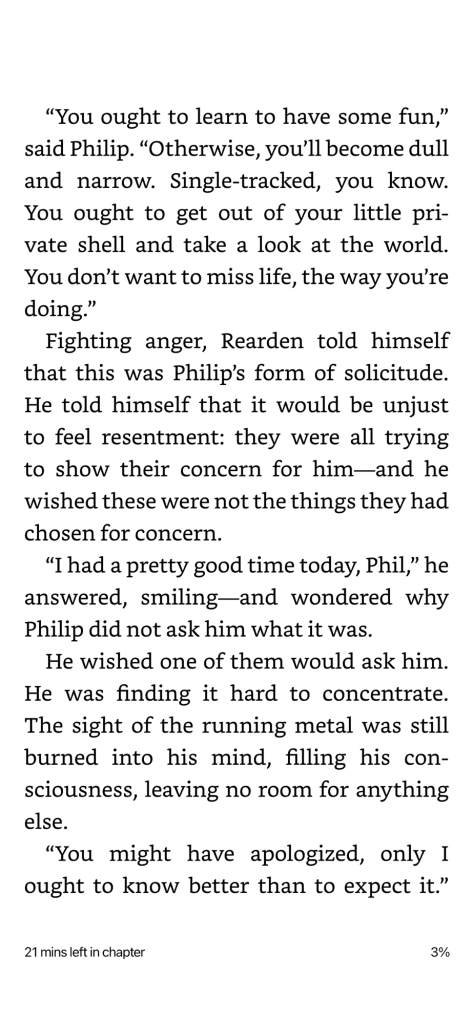
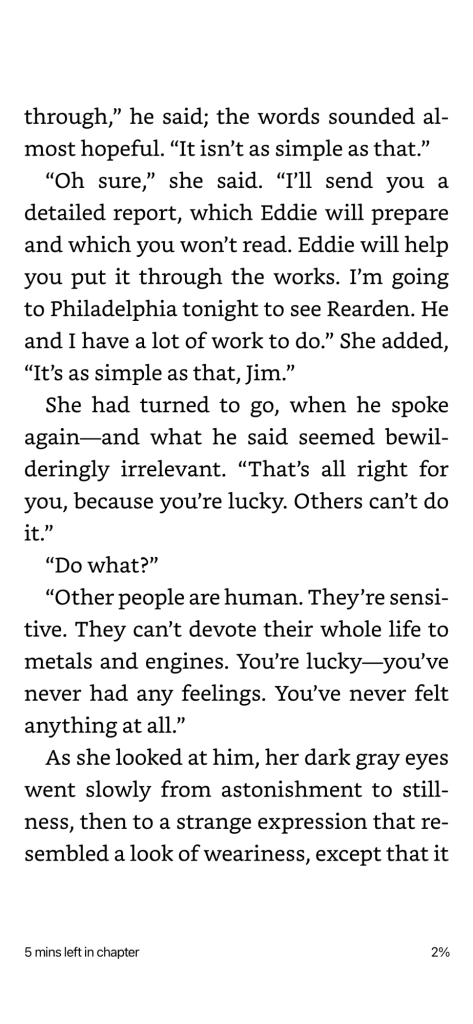
Hank Reardon is also, totally autistic, in this scene hyper-focused on the new type of steel he had developed, during a social situation:

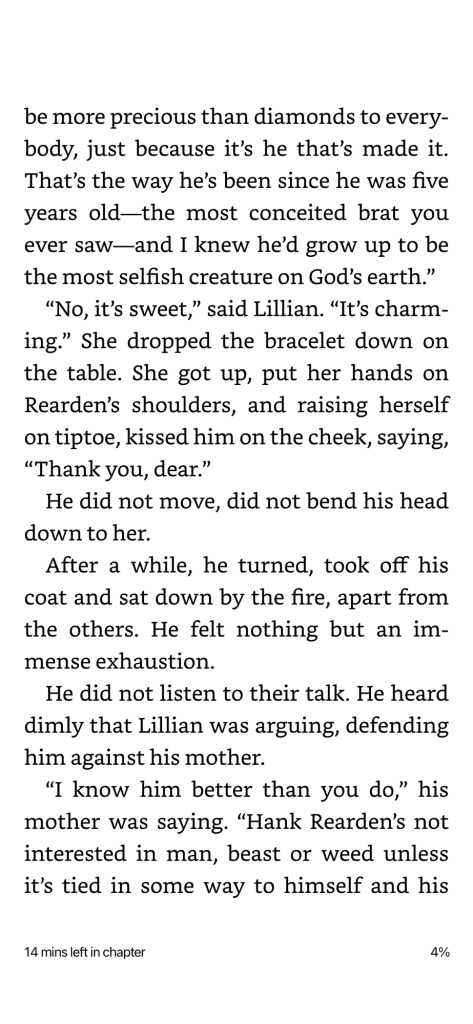
And here is Hank suffering from autistic overwhelm:

Just wanted to get these thoughts out for now. I may have more to say after I’ve finished the book. (Editor’s Note: I drafted this post months ago so I have since finished it.) I also have a whole, long piece I’m envisioning on the intensely autistic themes of Octavia Butler’s oeuvre, but that will need to remain in draft for now.

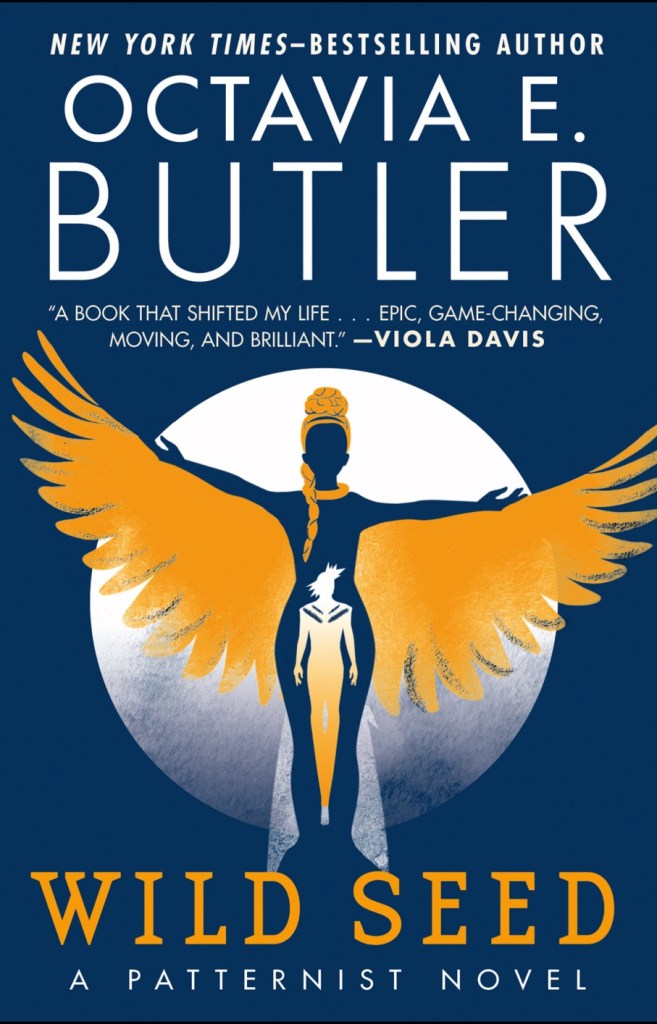
Wild Seed by Octavia Butler

It’s Black History Month, and so I have just started reading Mind of My Mind, the 2nd book in Octavia Butler’s Patternist series (4 books). But dipping back in after purchasing it on my Kindle (I had read the sample earlier, the publishers had made the smart choice of offering almost a quarter for the book for free, so I was re-reading at first) brought back the memories of the 1st book of the series, Wild Seed.

That book was unlike anything I’d read, truly unique and it introduced me to Butler’s singular voice. I’m not sure I’ve read Parable of the Sower, her more famous work, I’ll have to go back and check… but Wild Seed was intense and arresting.

How appropriate for Black History Month, because the premise of the story is about subjugation and is a speculative projection of what true enslavement would look like. What if your very mind could be enslaved? What if harm to those you love could trap you to a malevolent, sinister will?

The main villain, Doro, can consume the mind and take over the body of anyone. And the initial protagonist, also immortal in a way, can shift her body into any shape. What follows is an intensely dark, cruel, and disturbing unfolding of events, plumbing the depths of violence starting from the time of slave trading in Africa.

The epic, intergenerational story is relieved from time to time by human moments of tenderness and compassion in the face of horrific situations, but on the whole it’s a melancholy and utterly engrossing read. Truly a one of a kind achievement.

In this time of reflection, by negative and opposite example, it shows that in reality, enslavement never truly meant ownership of another person, because at the core, the person’s mind was free. When even that freedom is taken away, what could result is absolutely chilling.

5 Helmets out of 5

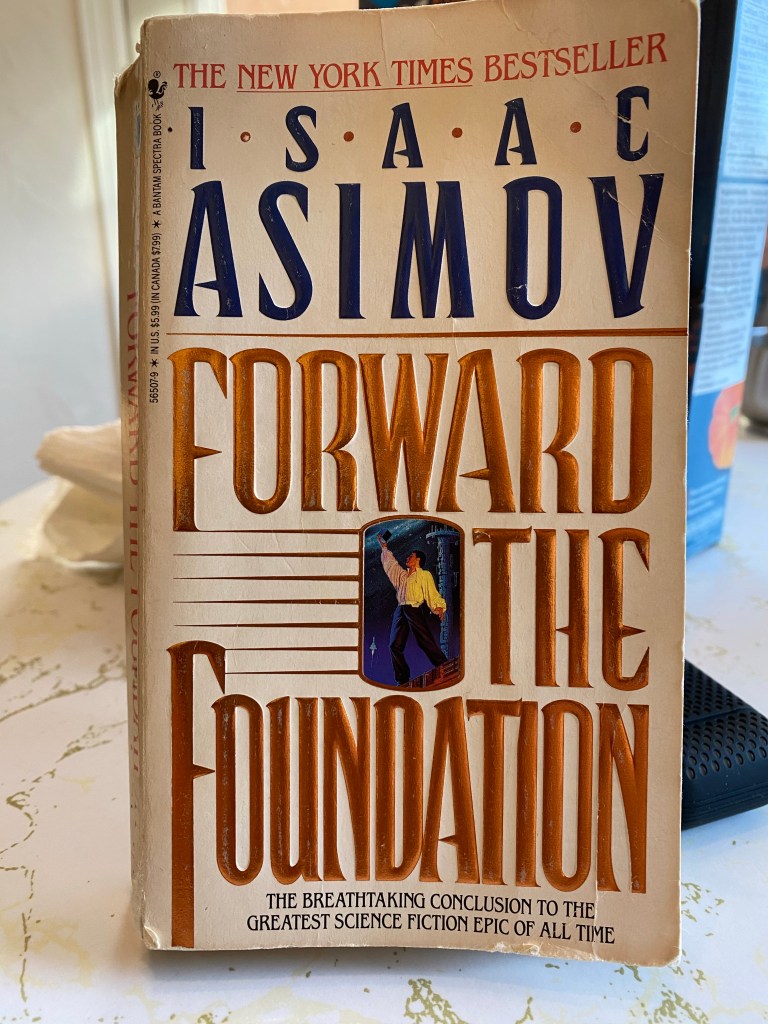
Forward The Foundation by Isaac Asimov

Not great. This has somewhat interesting plot lines for the first 2 thirds of the book, concerning Raych, but it really really peters out at the end, in the manner of a tired, out of touch old man. I mean both Hari Seldon and Asimov himself. The last third dotes on uncomfortable descriptions of Hari’s blond, beautiful, attractive granddaughter who helps Hari tie up a few loose ends in a rote, boring way.

Tarnishes the series a bit for me honestly. He can really be pompous and arrogant, Asimov, in his ideas that smart people know better than everyone else and should be trusted with manipulative ability to “push” people with their mentalic powers. Interesting, I was just watching Gen V and one of the main characters also refers to her similar abilities as “pushing”. I wonder if Asimov used it first.

I’m about to donate this book so here’s the record that I read it. 2 Helmets out of 5.

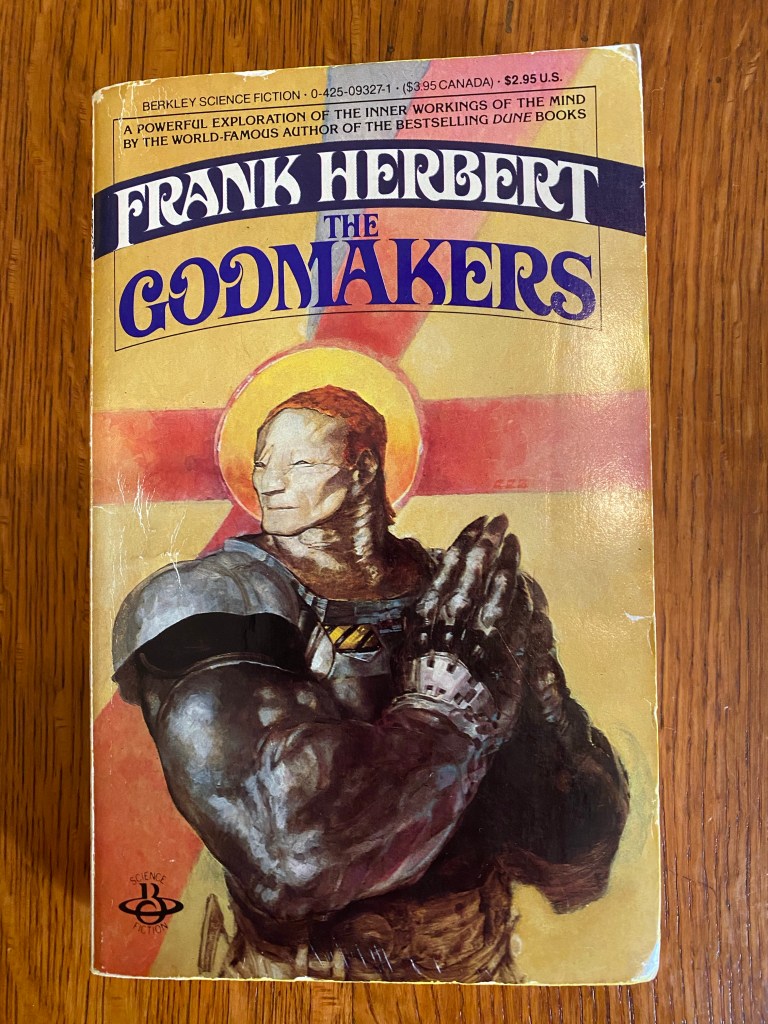
The Godmakers by Frank Herbert

I seem to have a soft spot for science fiction novels with the word “God” in the title. And Frank Herbert’s name has some resonance for me. Although I am not a huge Dune fan, I do admire the novel, and quote weird funny lines from the film every now and again, in conversation. So I gave this a try.

It’s just okay, I guess. There are some Big, Weighty Issues presented, but the way they are tackled is disjointed at times, with some chapters meant to be payoffs turning out to be flops after unwarranted build up. This feels like the sketch of a better book, highly episodic in nature.

Once thing I do like is the disgruntled snarkiness of the protagonist, Lewis Orne, and the combative relationship with his asshole boss, Stetson. Orne acts like a really sulky son-of-a-bitch when he’s first called out and criticized, and to be fair, Stetson really rips into him with ridiculously funny churlishness.

One of the phrases in the book is “Gods are made, not born.” This makes some sense, actually, in the way that religion fashions gods, and in the other way that true “creator of the universe”-type gods ought not to have an origin story. Oh, and in the third way that there are priests literally making gods out of thin air by sitting in a circle and chanting.

The casual sexism is amusing, as a capsule of its time. Our hero encounters not one, but two fiercely female-led societies, one open and the other secret. The first is an authoritarian witch-planet that nearly kills him, and the second is a vast conspiracy of wives bent on manipulating their husbands into positions of power. Cool.

All these episodes culminate in a ordeal, a trial for Orne. It’s sort of a vague cacophony of religious mumbo jumbo that strains to hang all the ideas together, but just treads water attempting to do so.  The final confrontation works pretty well, though, evoking some swelling sense of awe, before the whole thing ends quite perfunctorily.

I did like some of it. 

I give this book a rating of 2.5 Helmets out of 5.