Well, let me start first with the things I DO like that they (Silicon Valley tech bros like Elon Musk and Peter Thiel) also are known to like.
I like the first 80% of Atlas Shrugged.
I do still love Douglas Adams. Mostly.
But I think I don’t like Iain M. Banks. I read somewhere that Elon and his buddies have referenced in multiple instances their love of Banks’ Culture series of space opera novels. So in my casual side quest to read what they read, to understand their motivations for controlling this current hellish movement in American history, I downloaded a copy of Consider Phlebas, the first book of the Culture series.
And it’s bad.
I’m only 43% in, and I recall seeing some user reviews that suggest the first book isn’t well regarded and the series gets much, much better. But my lack of faith in that opinion is like arguing with someone against Jordan Peterson, when they say “But you really have to watch this 3 hour video he did on personal responsibility and the importance of tidiness” or “You really have to watch these 7 videos of him DESTROYING these left wing cucks in carefully curated straw man debates”. Uh, no I don’t.
There’s enough for me to dislike already.
First, there is very little that’s compelling about the main character, Horza, a “Changer” operative that can impersonate anyone and has advanced self-bio-hacking abilities. Yawn.
Then, eventually, he is dropped into a “the natives are restless” hostile island situation, where the villain is this disgustingly obese (see, I avoided using the word morbidly which is so overdone) corpulent cesspool of a tyrant. And it’s just so gross and cruel and without purpose or reason, to get so graphic and torturous. I feel like the intention is to be funny, but it’s dreadfully unfunny, and lacking of the wit and underlying kindness of say, Douglas Adams in Hitchhiker’s Guide.
And then there’s this casual tossing around of words like slut and bitch to refer to incidental background character women. I imagine it’s possible to explain this away as “it was a different time”, which I imagine to be the 90’s and early oughts. But still, it’s just done so artlessly and without humour. It’s out of touch and dated.
Anyway, I am struggling to finish this one and won’t be buying more.
Give me my woke-ass appreciation of Octavia Butler anytime. That shit is breathtaking, especially in comparison to this apparently upwardly-failing Englishman, may he rest in peace.
How did I get to Ayn Rand? Not the usual way. I was listening to an episode of the podcast Uncanny Valley, “Is Silicon Valley Actually Libertarian” and they were discussing how Atlas Shrugged is one of the foundational Ur texts of the so-called libertarian tech bro movement. I realized I’d never read it and sought out to do so. I had an idea of what it was about but I wanted to evaluate to source text for myself .
I think I’ve always had an unconscious bias against Rand because of how she’s referenced historically, and imagined a dry, preaching tome of ideology. And even if that might be true to some degree, I found that instead I was surprised by how delightfully compelling her writing and narrative turned out to be. I’m really enjoying this book.
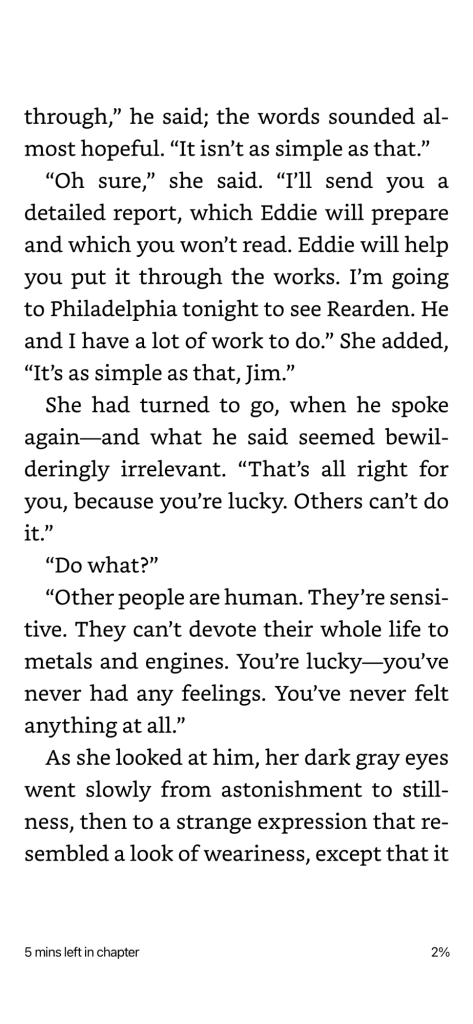
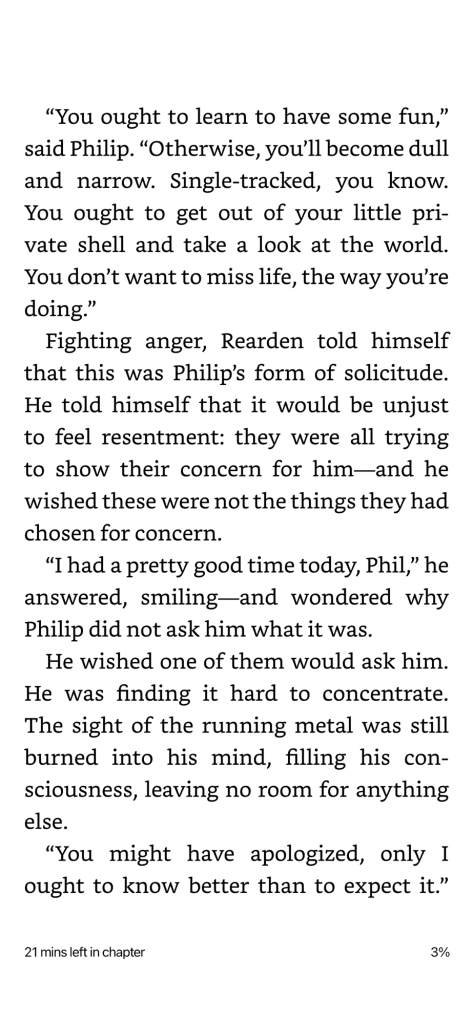
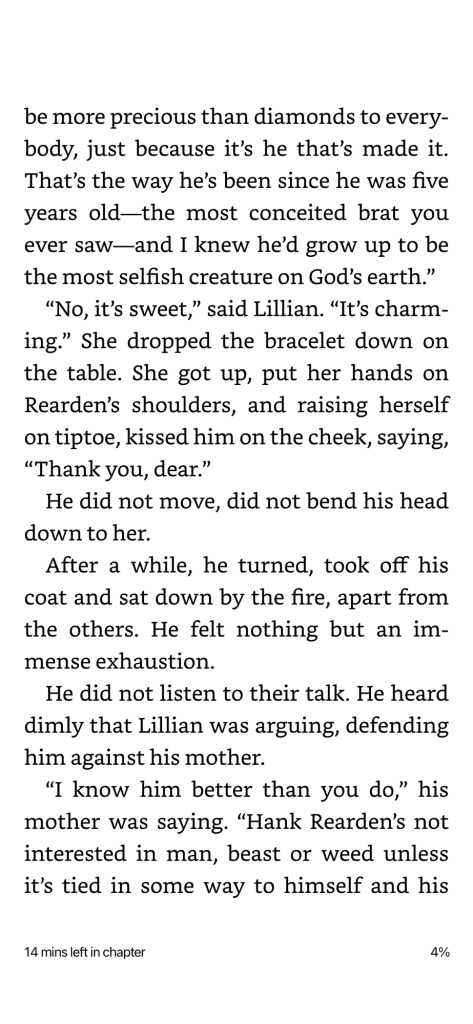
This is not a review and just the first impressions of the first several chapters, but the examples of autistic traits are so clear to me, and so finely wrought in prose.
Dagny Taggart is autistic:
Hank Reardon is also, totally autistic, in this scene hyper-focused on the new type of steel he had developed, during a social situation:
And here is Hank suffering from autistic overwhelm:
Just wanted to get these thoughts out for now. I may have more to say after I’ve finished the book. (Editor’s Note: I drafted this post months ago so I have since finished it.) I also have a whole, long piece I’m envisioning on the intensely autistic themes of Octavia Butler’s oeuvre, but that will need to remain in draft for now.
Reviewing the week’s news, I can’t help but see some intentions emerging from the deliberately overwhelming flurry of Trump’s first few days of his second term, including his Davos address. I think his expansionist rhetoric is real – he intends to use economic, if not purely military, force to form an American protectorate across North and Central America, with Greenland added in to boot. His “jokes”, at first seemingly insane, are more than jokes.
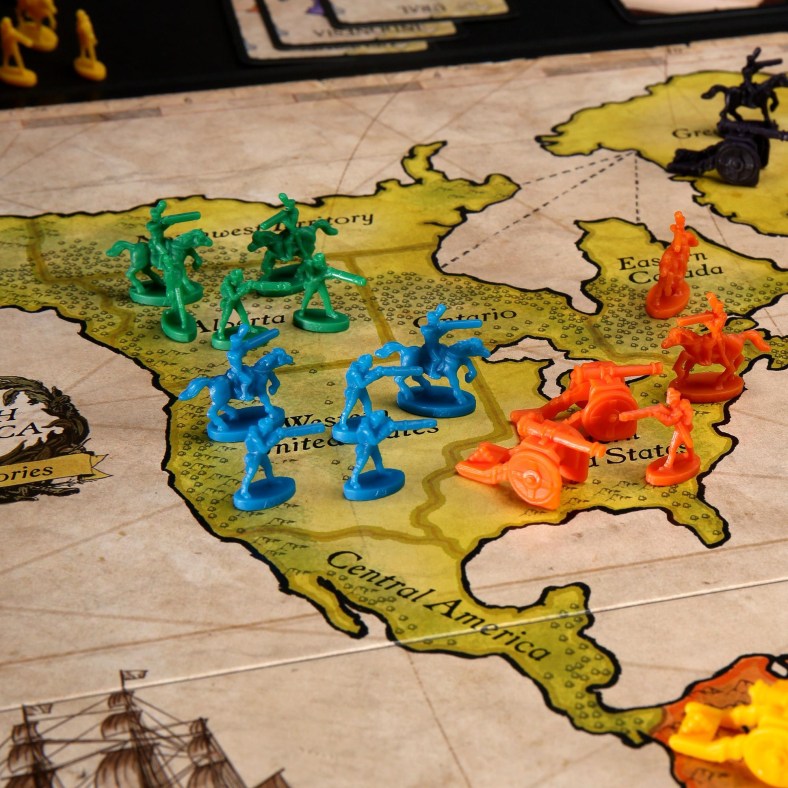
Why am I thinking about the board game RISK? I think Greenland is in there mostly because it looks so huge up there on a Mercator projection of the world. For his ego, he wants to grab all that far northern territory, and take credit for doing it.
And Panama, it’s right next to U.S. controlled Costa Rica, so might as well grab that and secure the trade route to remove Chinese influence.
Canada is weak politically right now, and will hold out from a sovereign perspective, but would give up a lot of other concessions.
And Mexico, as a population (consumer) source would be amazing. It just needs to be brought in line for investment, and the declaration of the cartels as terrorists will allow bombing of their bases, sure to become popular with many, Mexicans included. Gaza has shown that people’s tolerance for indiscriminate loss of collateral human life is pliable if challenged relentlessly.
Coupled with withdrawal from other zones of the world stage (leaving Europe to fend for themselves, abandoning Taiwan), we might be seeing the emergence of the Orwellian world order of 1984. Oceania, Eurasia, Eastasia. Great.
I have a six year old son. He’s loving, funny, joyful, smart, persistent, and determined. He’s not fearless but he is adventurous. He has been the most rewarding experience of my life. He’s also autistic.
I’d say he has mild support needs, but he does have a disability in the form of a significant speech delay, so we have some challenges and worries, along with the frequent, overflowing hits of joy he provides. He’s everything to me, and in my mind, he has become the primary future audience I am writing to in this blog. I want him to know what his dad was into, what his dad was thinking about. And so it’s time for me to write this now, so that he knows the main thing I think about now is him.
We’re on vacation and have rented a place up in Bracebridge, for the third time in a couple years. Since we don’t own a cottage (the great divider in Ontario, rarely acknowledged in polite company, between old-money Haves and new-money Have-Nots) we are attempting to solidify a “family cottage” childhood experience for our son by renting the same place on AirBNB over and over again. It’s kinda working. And even though, per night, it’s quite expensive, it’s not nearly as expensive as buying and maintaining a cottage.
A couple days ago we went to nearby High Falls, and right next to it, Potts Falls. The three of us, my wife, my son, and I, ventured out past a guard rail and gingerly stepped onto a rocky outcropping overlooking both falls. We were quite proud of ourselves, and snapped a few pictures. My boy, of course, wanted to go close to the edges but we wouldn’t let him, keeping him at least 6 feet from any steep drop. He’s a little… sporadic in his movements sometimes, especially when he’s happy and excited. So I get nervous, wary of hops and flaps that sometimes catch even him by surprise.
We had the area to ourselves until suddenly, a group of 5 or 6 children, mostly bronzed and tousled-haired boys with a few little blonde girls in the mix, fanned out excitedly around us. Their parents, a couple of similarly sun-bronzed moms and a fit, blustery dad were a little bit behind and soon joined us. But before they did, one boy in particular, couldn’t have been more than 4 years old, wandered right up to the edge of the falls and danced on the edge. Eventually I heard someone casually call him back. But he and his siblings and friends continued to scramble around up there, some disappearing over an edge to land on an outcropping below, I presume. I smiled wanly, not meeting anyone’s eyes, something I tend to do with strangers, but inside I was cringing the heck out. Jesus. I did NOT want to see anyone have an accident, and then, have to be involved (banish the selfish thought). After a short time, I couldn’t stand it any longer and hustled my family away, sensing the same sentiment from my wife.
We found a trail, and decided to take off into the forest. Along the way, we saw a sign for portage (a person carrying a canoe), which we figured out might lead next to the lake and a view of the falls from below. Indeed it did. It led to a clearing and then a stony beach, which was at the foot of Potts Falls, the smaller of the two falls, still about 3 or 4 stories tall. We gingerly explored the shoreline. Our swim suits where way up back at the car, so I rolled up my son’s long sweat pants and let him dip his feet in the water. I was wearing waterproof Timberlands so I followed along. My wife was wearing city Skechers so she stayed behind on a log.
Soon, the bronzed outdoors tribe, still dressed in swim suits and carrying a few towels, emerged onto the beach as well. The children immediately jumped into the lake and started roughhousing around. Some of them jumped into the water, hardly looking where they leaped. The adults joined in.
I glanced at my son, gauging whether he wanted to investigate and perhaps join in. But of course, that is not typically his way. He’s often content to be off to the side, sometimes observing, so that’s what we did.
And this happy, outdoorsy, naturally social bunch had a lovely time, climbing up and down the falls, floating and playing in the frigid waters, hooting and hollering. We couldn’t help but feel a little sheepish. Why couldn’t we be like that, so carefree and confident? I mean, we had a nice time too, my son picking his way down the shoreline in his bare feet, and me following behind in mine (I had shed my shoes). We found the one warm patch of water in the sun, and stood there in the shallows, 2 feet from the water’s edge. I beckoned my wife to come in. No thanks, she said.
Eventually she did come in, and found a rock to sit on with her feet in the water. We moved our way back towards her and my son waded out a bit further to find a similar rock. By now, the sun-kissed, blessed and invincible family group had gone, having climbed the waterfall that after all, ascended in manageable chunks, each no more than half a person’s height. My son found a rock near all of that, and perched on it.
Sensing he wanted to go further, I rolled up his sweat pants a little more, till they were halfway up his thighs. He looked funny with his pants bunched way up like that. I was in shorts so I was already okay. Sure enough he waded into the water a bit more. Now he was just to the right of the waterfall, and it was getting too deep for even his extra rolled up pants. I laid my hand on his shoulder and tried to coax him back to shore.
He didn’t budge. My son, who speaks much, but in a generally “younger than his age” and sometimes echolalic way, looked at me and said, “I want to climb the water stairs.”
I paused.
“Do you mean you want to climb up this waterfall?” I asked, doubtfully, looking up at the top, which was as I said, maybe 3 or 4 stories high. I had never, in my life, climbed a waterfall.
“Yes.”
Well, there did seem to be plenty of foot holds. And the water, cascading down, was not very intense and left plenty little pools and plateaus where we could rest. The falls sloped up not so steeply that we would be forced to get soaked. I thought about a rustic park fountain we sometimes passed by, back home in Toronto, that featured water cascading down rocks to a pool below, and how each time we passed it I held my son back from climbing to the very top, because we “weren’t supposed to”. No one was telling us not to now. And he had just seen a bunch of kids do it.
I called back to my wife, who by now was sitting on her log again.
“Hey, we’re going to climb this waterfall. Can you go back up the trail and bring our stuff to the top?”
She only hesitated for a second, and then said yes. I think she read the situation perfectly.
I lifted my son out of the water and onto the first ledge. I hauled my own unfit rickety body up there too. And then foothold by foothold, we ascended the waterfall. I would brace myself on firm-ish footing behind my son, and in my shadow underneath my body, he tested and tried different ways to place his own feet to climb. A few times I guided his hands up to grip edges, to stabilize himself.
Gingerly, we stepped into little pools of water, finding the bottoms slippery with moss. But my son kept finding his footing, still in my enveloping shadow, as I scaffolded his climb in case he slipped. But he didn’t slip. And a few times we could have gone off the side of the waterfall onto solid ground, an easier path up. But we didn’t. My wife had accessed some of those points too, and held out her hand in case he wanted to get off. He waved her off each time. He kept right on climbing, until we got right to the very top, where his mom ended up, waiting with our shoes and just the biggest smile on her face.
Wonderful. We did it.
I read Octavia Butler’s “Parable of the Sower” recently. There is a quote from it that made me think about my son. Here it is, a quote from its fictional holy text, EARTHSEED: THE BOOKS OF THE LIVING, by Lauren Oya Olamina (actually Octavia Butler):
Prodigy is, at its essence, adaptability and persistent, positive obsession. Without persistence, what remains remains is an enthusiasm of the moment.
Octavia Butler
P.S. The very few of you who know me in real life, please be aware that it is customary for autistic people not to be “outed” by other people. So while I write anonymously here that my son is autistic, that doesn’t mean I want it mentioned on my social media for anyone to see. I prefer to leave that right and preference to my son himself, when he comes of age.
There are several particular things a man can learn to do around the house that, once properly mastered using the correct procedure, become supremely satisfying and useful, for all time.
The three things that come to mind are:
1. How to carve a watermelon into those little Christmas tree shapes you sometimes see at restaurants.
2. How to fold a fitted bedsheet into a rectangle.
3. How to break down a cooked chicken into parts.
You can find the correct procedures on Youtube and maybe Instagram. These are fairly easy to learn, and take a bit of effort to understand, but it’s really gratifying effort. Once practiced about 3 times, any stress you may have had about these tasks will melt away forever and ever.
Here’s a couple of bonus tips that have also made something that was a chore a stress-free, almost welcome diversion.
– Pop in a single wireless airbud and listen to podcasts while doing dishes.
– Learn how to fold clothes the Marie Kondo way, particularly t-shirts so they can be inserted like books on a bookshelf edgewise into your drawers, sorted from darkest to lightest colors.
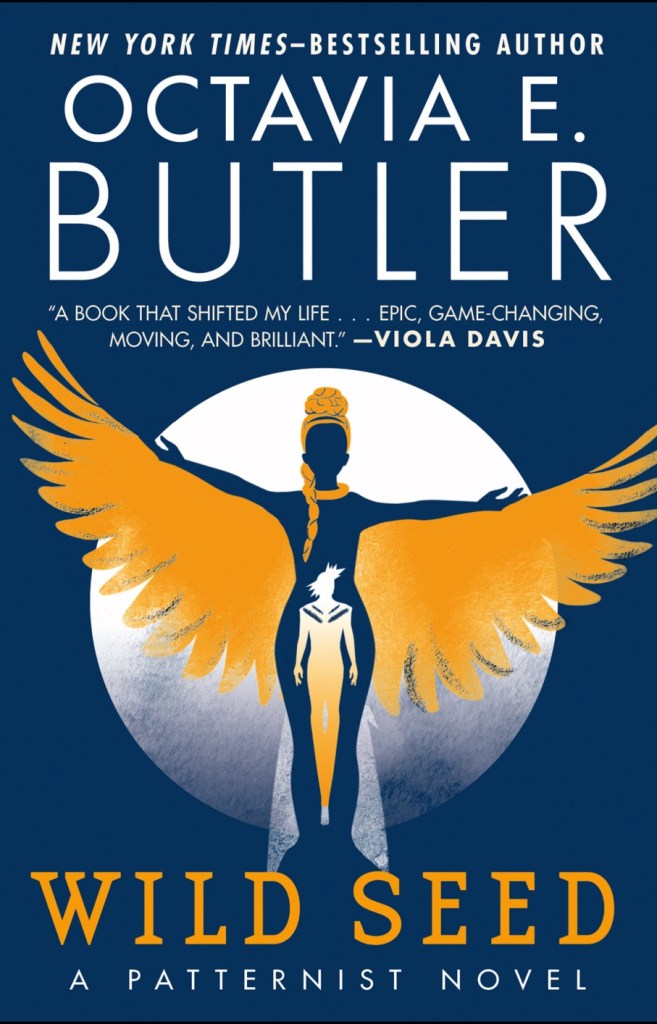
It’s Black History Month, and so I have just started reading Mind of My Mind, the 2nd book in Octavia Butler’s Patternist series (4 books). But dipping back in after purchasing it on my Kindle (I had read the sample earlier, the publishers had made the smart choice of offering almost a quarter for the book for free, so I was re-reading at first) brought back the memories of the 1st book of the series, Wild Seed.
That book was unlike anything I’d read, truly unique and it introduced me to Butler’s singular voice. I’m not sure I’ve read Parable of the Sower, her more famous work, I’ll have to go back and check… but Wild Seed was intense and arresting.
How appropriate for Black History Month, because the premise of the story is about subjugation and is a speculative projection of what true enslavement would look like. What if your very mind could be enslaved? What if harm to those you love could trap you to a malevolent, sinister will?
The main villain, Doro, can consume the mind and take over the body of anyone. And the initial protagonist, also immortal in a way, can shift her body into any shape. What follows is an intensely dark, cruel, and disturbing unfolding of events, plumbing the depths of violence starting from the time of slave trading in Africa.
The epic, intergenerational story is relieved from time to time by human moments of tenderness and compassion in the face of horrific situations, but on the whole it’s a melancholy and utterly engrossing read. Truly a one of a kind achievement.
In this time of reflection, by negative and opposite example, it shows that in reality, enslavement never truly meant ownership of another person, because at the core, the person’s mind was free. When even that freedom is taken away, what could result is absolutely chilling.
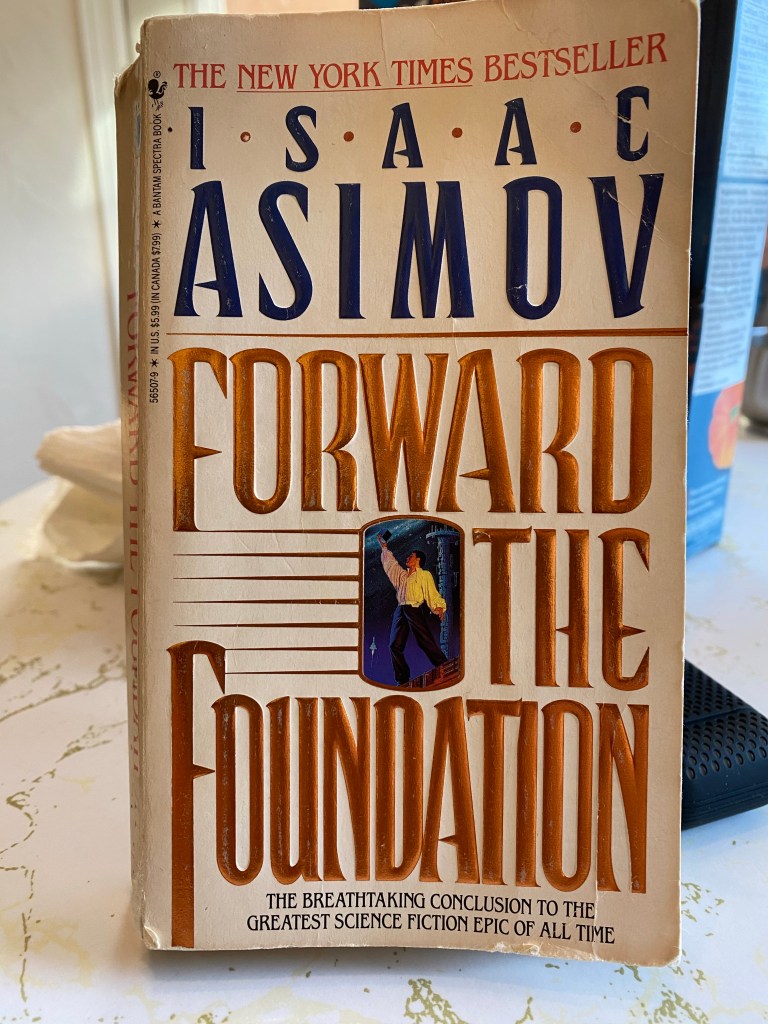
Not great. This has somewhat interesting plot lines for the first 2 thirds of the book, concerning Raych, but it really really peters out at the end, in the manner of a tired, out of touch old man. I mean both Hari Seldon and Asimov himself. The last third dotes on uncomfortable descriptions of Hari’s blond, beautiful, attractive granddaughter who helps Hari tie up a few loose ends in a rote, boring way.
Tarnishes the series a bit for me honestly. He can really be pompous and arrogant, Asimov, in his ideas that smart people know better than everyone else and should be trusted with manipulative ability to “push” people with their mentalic powers. Interesting, I was just watching Gen V and one of the main characters also refers to her similar abilities as “pushing”. I wonder if Asimov used it first.
I’m about to donate this book so here’s the record that I read it. 2 Helmets out of 5.
So Elon just rebranded Twitter as X, the Everything App. This is partially a response to Meta putting out Threads a few weeks ago and expanding to 100 million users super fast.
People are saying it’s crazy to destroy the Twitter brand as that’s the most valuable thing about the company, but in truth it’s already tarnished by it’s apparent decline and by Musk himself. It dropped off the list of 500 most valuable brands.
So will we look back on this as a brilliant move?
We all laugh and point at Elon as this out of touch joke. But then one day he literally launches into the sun an electric car he literally built on a rocket ship he literally built, and while we are still laughing, we are also thinking… wait, woah.
My updated predictions are that he’ll finally get Trump to start “x-ing” again (which he will do anyway as the criminal charges ramp up and he tries desperately to become president again primarily to pardon himself), and that X will embrace porn. There is probably not a bad business case for both. Deplorable but… woah.
So I’m reading physicist Brian Greene’s new book, “Till the End of Time”, and in it he references Michael Graziano’s schema-based theory of consciousness, under a nicely succinct subheading “The Mind Modeling The Mind”. The theory is, basically, when a conscious mind is contemplating an object (in Greene’s example, a Ferrari), it creates a simplified model of that object and its attributes, but furthermore, it creates a model of a conscious mind paying attention to that object. This model of the mind is what give us the feeling of being conscious.
That made me think (and I’m trying to remember if it was discussed in Graziano’s book) that the defining characteristic of being conscious is the temporal concept of “now”. That is to say, a subjective (to me, myself, and I) moment in time that moves through a narrative, a story of what’s happening right now to that model of myself paying attention to something. It’s this concept of “now” that can then process any “then” (not now) – in other words, the past and the future. The now, the conscious present, can dive into the data of the recorded past (in my brain) to project a simulation of the future.
Sounds exhausting. That’s probably why we need to sleep, or lose consciousness, periodically, during which we lose all concept of now (unless we are consciously dreaming). Our brains clearly need rest from this exhausting effort of modeling our current moment in time, all the time.


 Dork Helmet